
If your business is registered under GST, every sale must be backed by a proper tax invoice. A correct invoice protects you during GST return filing and helps your customers claim input tax credit. Below is a practical checklist for small shops and service providers. This is general information, not tax advice — confirm specific cases with your Chartered Accountant or the official GST portal.

Fields a GST tax invoice should contain
- Supplier’s name, address and GSTIN
- A unique, consecutive invoice number (per financial year) and invoice date
- Customer’s name and address; customer GSTIN if registered
- Place of supply (state name and code) for inter-state supplies
- Description of goods/services, HSN or SAC code, quantity and unit
- Taxable value, applicable discount
- Tax rate and amount: CGST + SGST for intra-state, or IGST for inter-state
- Total invoice value in figures (and words, as good practice)
- Whether tax is payable on reverse charge
- Signature or digital signature of the supplier
Tax invoice vs bill of supply
Businesses registered under the composition scheme, or selling only exempt goods/services, issue a bill of supply instead of a tax invoice and do not charge GST separately.
Common mistakes
- Charging CGST + SGST on an inter-state sale (should be IGST).
- Skipping or repeating invoice numbers.
- Wrong customer GSTIN — the customer loses input credit.
- Rounding tax incorrectly; calculate tax on taxable value per line.
Use a template
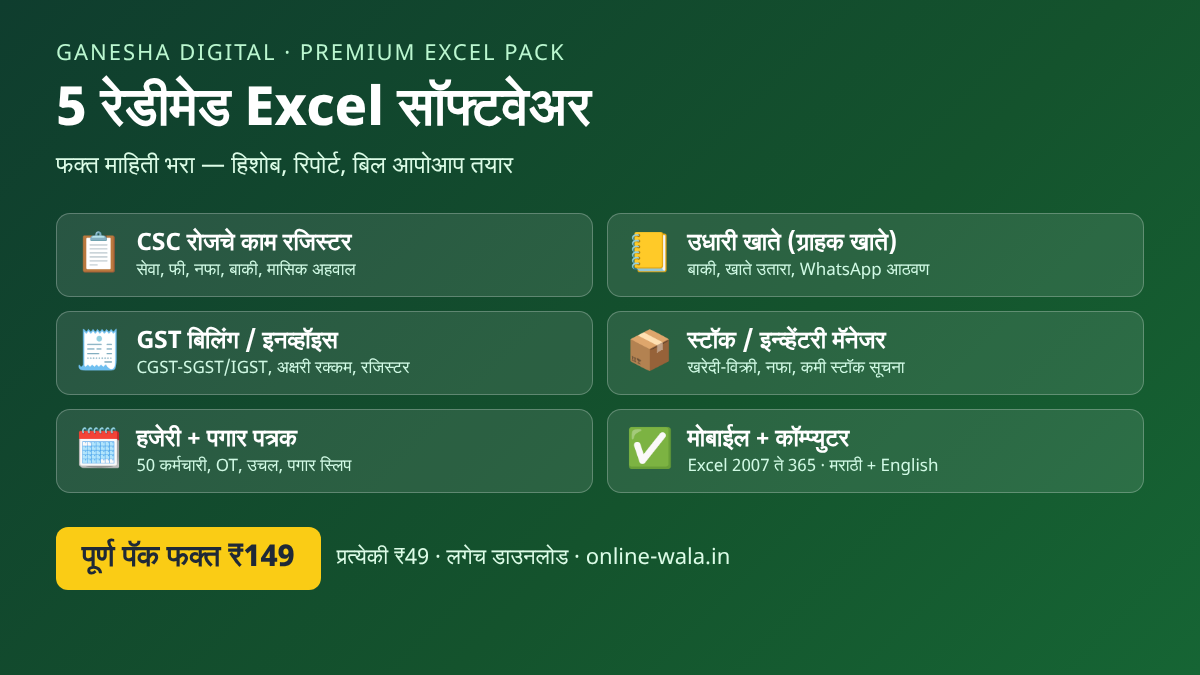
An Excel invoice template with automatic tax calculation reduces errors and saves time. Fill only the input cells, keep a copy of every invoice, and back up your file regularly.

Ganesh Gavit
Owner, Online WalaFounder of Ganesha Digital. Creates software, apps and ready-to-use templates for businesses, students and CSC/VLE operators.